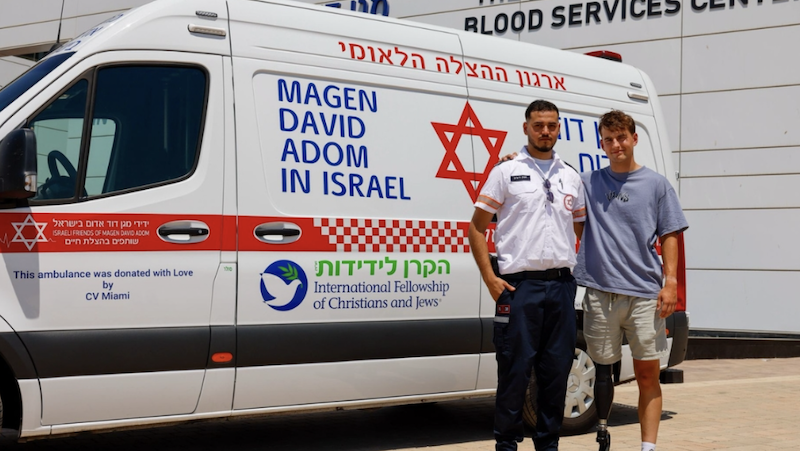



MDA Siblings Respond to Beit Shemesh Missile Strike
Beit Shemesh: "This Is My Country, This Is My City, and This Is My Mission – Saving Lives”
When saving lives runs in the family: Mordechai and Meira Solanika, brother and sister and MDA volunteers from Beit Shemesh, were dispatched from their home in the city to the scene of the fatal missile strike in Beit Shemesh. They were among the many MDA teams that operated there 1st of march 2026, providing treatment and evacuating casualties at the difficult scene.
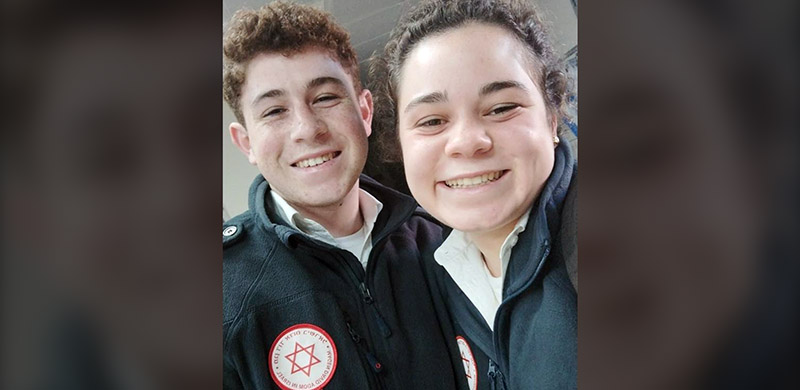
Meira (22) and Mordechai (20), both volunteers with MDA Beit Shemesh since they were 15-year-old youth volunteers, were in a safe room as the missile struck and were dispatched by MDA’s 101 Emergency Dispatch Center to the impact site.
“We parked far from the scene so as not to block evacuation routes or interfere with ambulances arriving and evacuating the injured, exactly as we were taught for a mass-casualty incident, and exactly as we practiced again and again until it became second nature. We arrived on foot, and then the sight of the scene hits you like something out of a horror movie,” recalled Mordechai, currently on leave from the military and undergoing training as a combat soldier. “Fire, smoke, screams, a crater where a house once stood, destruction across a wide radius, stones, metal, exposed electrical wires. Chaos.”
When they arrived, Meira and Mordechai split up. Each joined an MDA commander in a different sector of the extensive scene.
“At first, I joined MDA teams who, together with the Home Front Command and other security forces, were searching damaged apartments and locating and treating casualties,” said Meira. “Meanwhile, my brother Mordechai was operating on the other side of the scene. He assisted ZAKA personnel in recovering those killed from the rubble.”
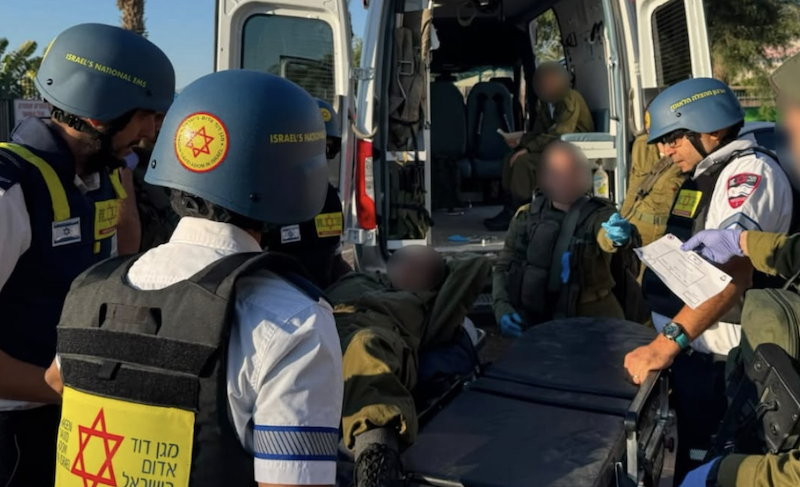
Mordechai also treated many casualties at the scene. Initially, he helped MDA teams provide treatment and triage casualties in the casualty concentration area, until he was asked to accompany an evacuation.
“An ambulance driver approached me and asked me to join him in evacuating a casualty to the hospital and to provide treatment during transport. Although he was lightly injured from shrapnel to his limbs, I will never forget that patient. It was one of the most difficult and heartbreaking evacuations I have experienced.
“It turned out that he had lost contact with his family during the missile strike. Throughout the evacuation, he repeatedly asked about the fatalities and the injured, their ages and their numbers, trying to understand whether his family members had been injured or, God forbid, killed. My heart went out to him. It was a sad reflection of what the community was going through at that moment,” he recalled.
“But after some time, which felt like an eternity, his phone rang, and his wife was on the line. She told him that his family members were safe and unharmed. I have no words to describe the relief we all felt, not just him. Despite the unimaginable tragedy, it was a moment when we allowed ourselves to hold on to the good ending of our patient’s story.
“It is indeed an unfathomable disaster, and Beit Shemesh took a heavy blow. But I feel I had the privilege to be there for my community at such a meaningful moment, thanks to my volunteer service with MDA. My service gave me the tools and knowledge to help. This is my country, this is my city, and this is my mission , saving lives,” he concluded.