


The Fight for Every Heartbeat
After suffering cardiac arrest at a construction site, a 36-year-old man was connected to MDA's Mobile ECMO Unit in the field and woke up just two days later with no neurological damage.
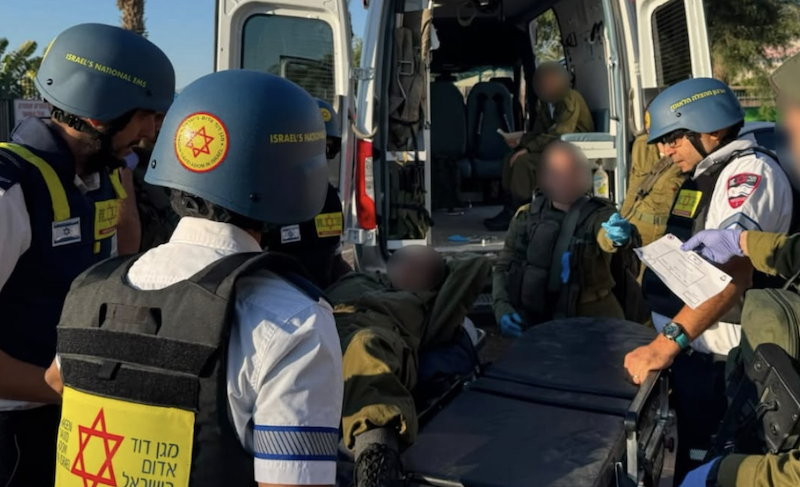
What began as a routine workday at a construction site in Rishon Lezion quickly became a race against time. On June 2, MDA's National Emergency Dispatch Center began receiving a flood of emergency calls. The reports were confusing. Some callers said a worker had fallen. Others reported that he had suddenly collapsed.
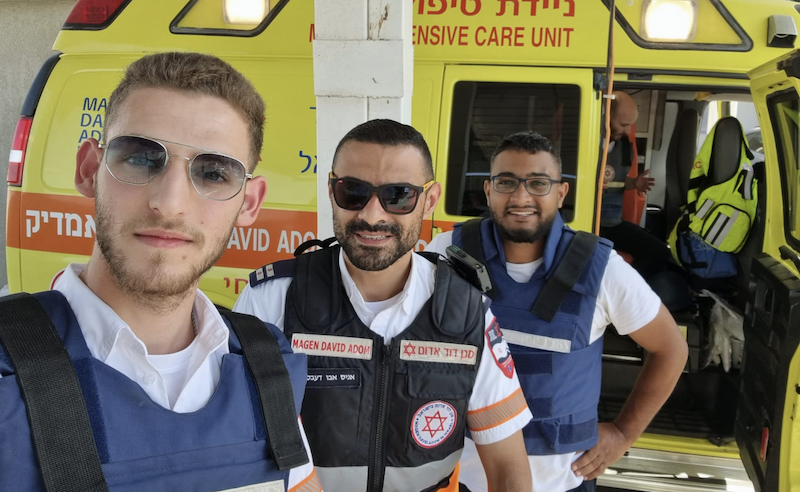
One fact quickly became clear: a man in his thirties was unconscious, not breathing, and in immediate danger. Recognizing the severity of the situation, MDA dispatched four Mobile Intensive Care Units (MICUs) and two Medicycle responders to the scene.
While emergency teams raced toward the construction site, the patient's coworkers became his first link in the chain of survival. Guided by MDA dispatchers over the phone, they immediately began performing CPR. Within minutes, an MDA Medicycle responder arrived and attached a defibrillator, which identified a life-threatening cardiac rhythm. A shock was delivered, briefly restoring circulation.
But the battle was far from over.
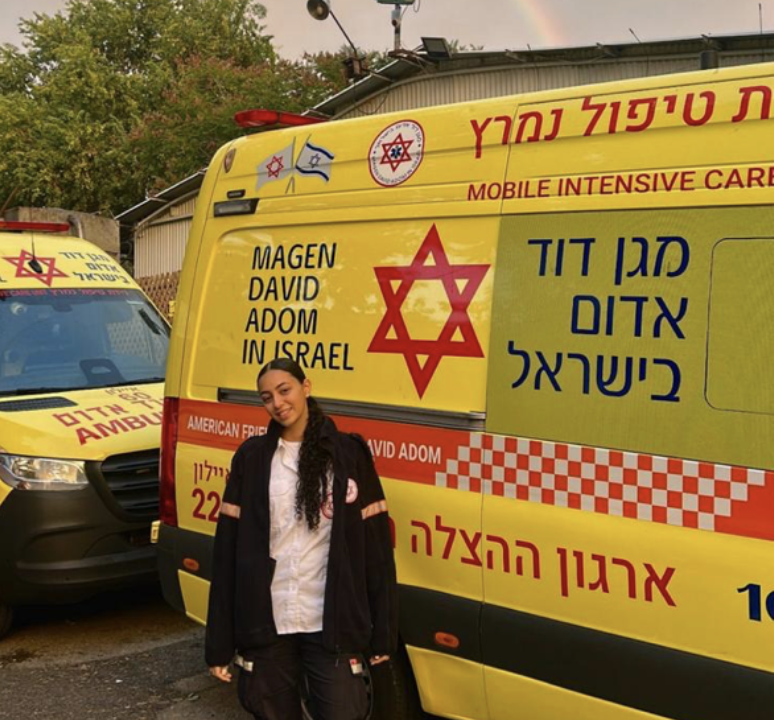
When MDA paramedics arrived, they found the patient still in cardiac arrest. Advanced resuscitation efforts began immediately as teams fought to stabilize him. "I arrived as part of the first ambulance team," recalled Karin Saran, a 20-year-old MDA paramedic volunteer with five years of service. "Before us, an MDA responder had already reached the patient and delivered a shock that briefly restored a pulse. As additional teams arrived, we continued advanced resuscitation efforts, including repeated defibrillation, medications, and lifesaving interventions as the patient repeatedly lost and regained circulation."
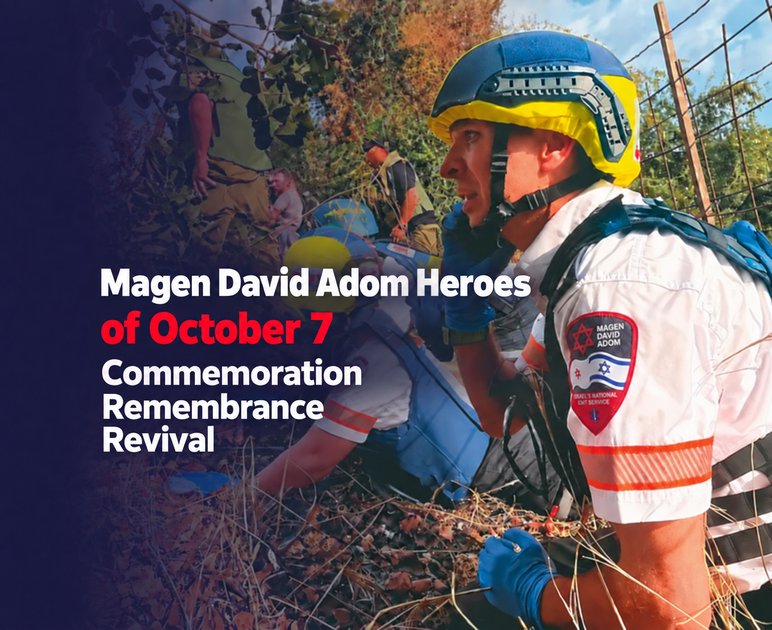
For long minutes, the patient's condition remained critical. His heart repeatedly stopped, only to be restarted through the relentless efforts of the teams surrounding him. Chest compressions, ventilations, advanced airway management, medications, and repeated defibrillation continued as responders refused to give up.
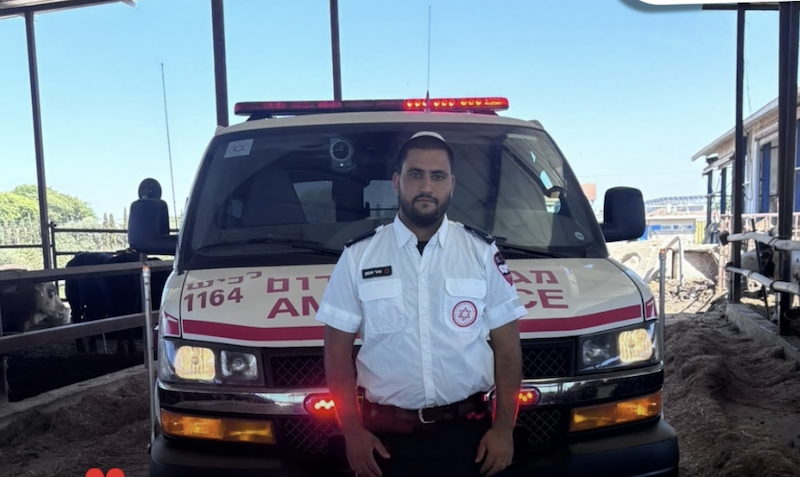
"It was remarkable to see how every part of the system worked together in complete synchronization," said Moriyah Shipman, an MDA paramedic and member of the ECMO team. "It started with the dispatchers guiding bystanders through CPR, continued with the first responder who arrived and delivered an early electric shock before the ambulance teams reached the patient, then with the two ambulance crews who continued advanced resuscitation efforts. Finally, the ECMO team arrived, and we worked together to connect the patient to ECMO while simultaneously continuing lifesaving treatment. Every link in the chain played a critical role."
Then one of MDA's most advanced lifesaving resources was activated: the Mobile ECMO Unit. ECMO (Extracorporeal Membrane Oxygenation) functions as a temporary artificial heart and lung system, providing critical circulatory support for patients whose hearts can no longer sustain life on their own. While traditionally available only in hospitals, MDA's Mobile ECMO Unit brings this cutting-edge technology directly to the patient. "Later, the ECMO team arrived and connected the patient to the system directly at the scene while resuscitation efforts continued," Karin said.
After circulation was restored once again, the patient was connected to ECMO and transported to Assaf Harofeh Medical Center for continued treatment. Then came the news every responder hopes to receive. Just two days later, the hospital's intensive care team contacted MDA with an extraordinary update.
The 36-year-old patient had been extubated. He was fully conscious, neurologically intact, and in stable condition. Doctors anticipated that he would soon be weaned off ECMO support entirely. The intensive care team specifically reached out to commend the MDA responders whose actions made that outcome possible. "The patient has been extubated, is fully conscious, and has no neurological deficits," the team reported. "We wanted to recognize the extraordinary and professional work carried out by the MDA teams at the scene."
His recovery was the result of every link in the chain of survival working exactly as intended: coworkers who immediately began CPR, dispatchers who guided them through lifesaving instructions, first responders who delivered an early defibrillation shock, advanced paramedic teams who refused to stop fighting, and the Mobile ECMO Unit that brought one of the world's most advanced forms of cardiac support directly to the patient.
For MDA, innovation does not begin at the hospital door. Through technologies like the Mobile ECMO Unit, patients experiencing the most severe cardiac emergencies can receive advanced lifesaving treatment before they ever reach a medical center. By bringing cutting-edge care directly to the scene, MDA continues to push the boundaries of what is possible in emergency medicine, and provide patients with every available chance at survival.