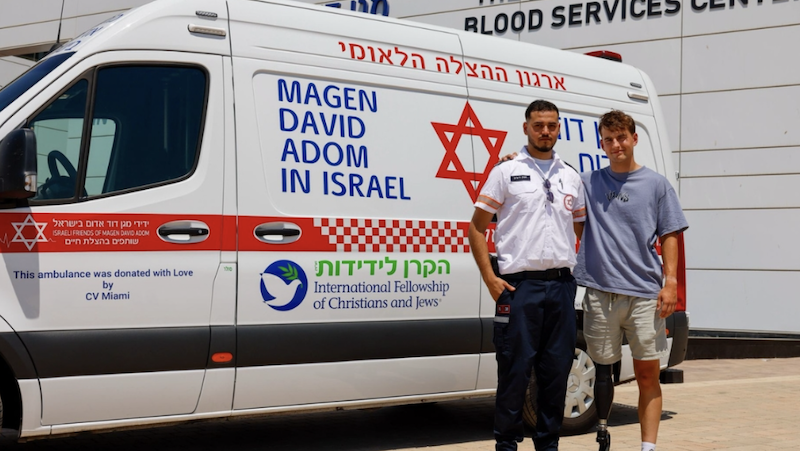



“You Have to Be a Little Robotic”: An EMT’s Day in Beit Shemesh
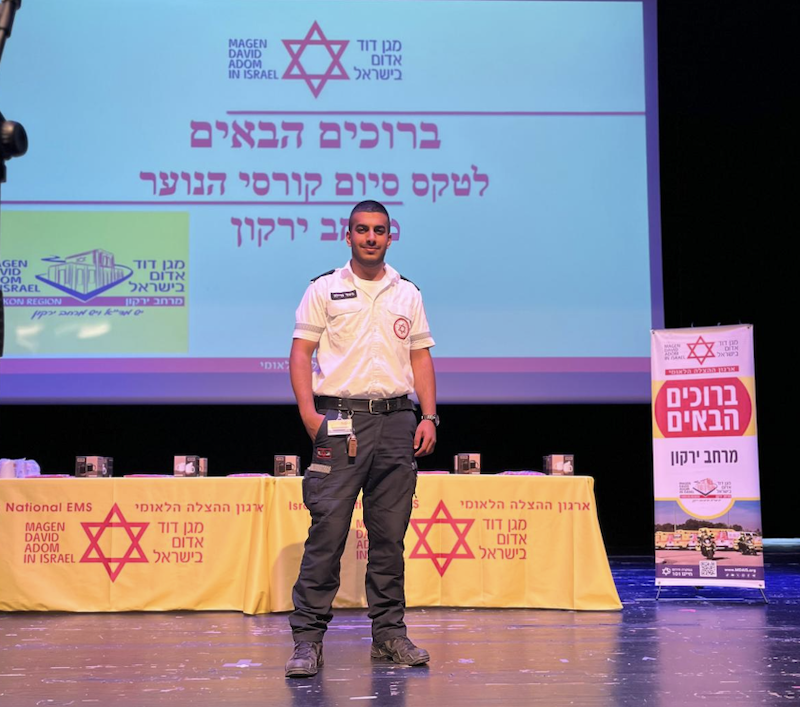
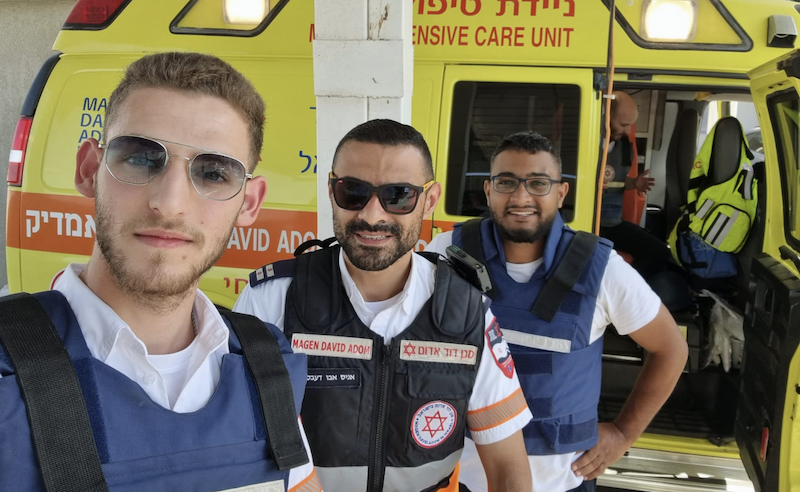
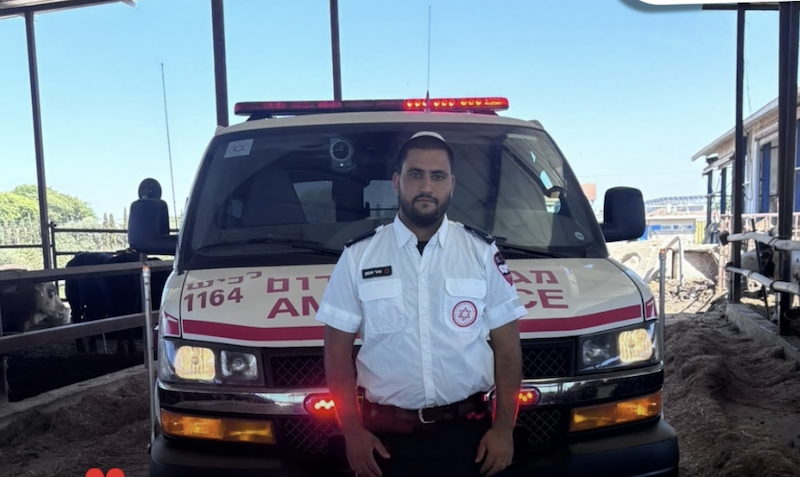
It was 10 a.m. of a Sunday morning, and Tzvi David, a 25-year-old MDA EMT and ambulance driver with nine years of service, was on his usual morning logistics drive around Jerusalem. Minutes later, a missile launched from Iran struck a residential area in Beit Shemesh.
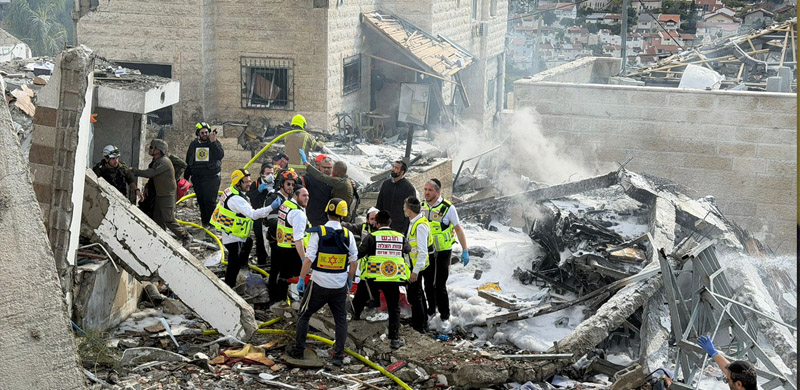
As soon as the alert came through MDA’s National Emergency Dispatch Center, the system shifted automatically into emergency mode. Several ambulances, Mobile Intensive Care Units (MICUs) and medicycles were dispatched simultaneously and an incident command was established within a few minutes. Forces from the nearest stations rushed to the impact site.
Although he was not in Beti Shemesh at the time, he had been assigned as a wartime emergency responder. When he got the call, he immediately turned his ambulance and drove as fast as he could to the scene.
When he arrived, the operation had already been structured. The strike had affected two parallel streets; therefore, MDA established two different areas and assigned each one its own Incident Commander. This allowed a coordinated triage, controlled evacuation routes, enabling ambulances to transport the injured to the hospitals around the area. Tzvi got assigned to the lower area.
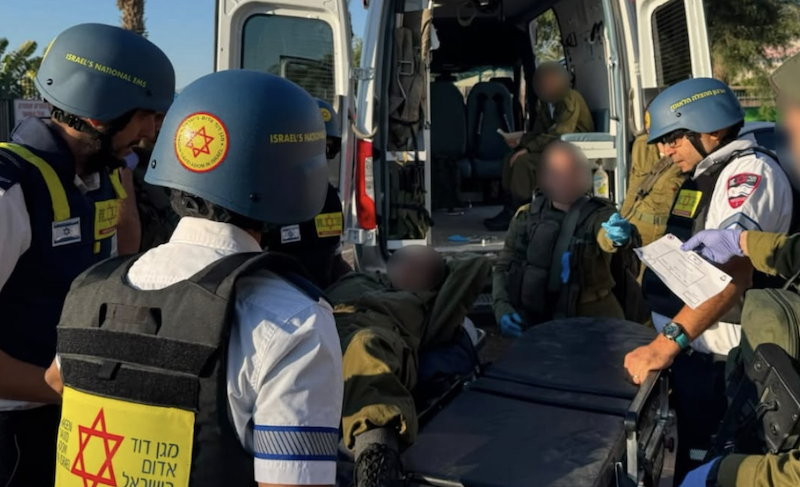
Under the direction of the area’s Incident Commander and in coordination with the Home Front Command and the police forces, Tzvi’s team began searching for people who could have been under the rubble. In moments like this one, the role of MDA is clear: locate those injured, conduct triage on site immediately, stabilize patients and transport them to the hospital.
Ambulances left and returned, coming back to the scene to collect additional casualties. In mass-casualty incidents, this rotation is critical. The vehicles do not wait: they clear, return and deploy.
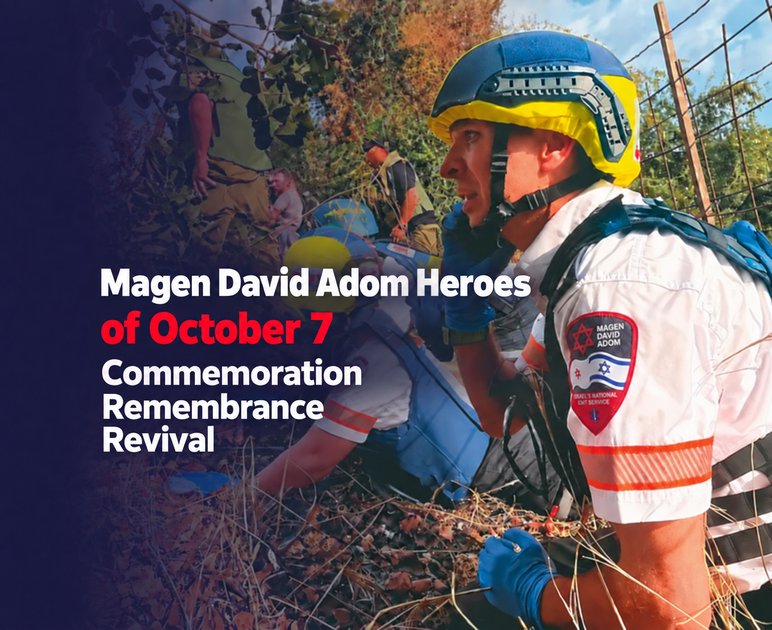
The scene was also unstable, which made the teams’ work even more difficult. There were exposed electrical lines, shattered glass everywhere and collapsed debris. The first responders wore protective equipment and moved with caution while they helped civilians get out of the damaged buildings. “You’re treating patients, but you’re also constantly making sure you don’t get hurt yourself and that you don’t injure the person you’re trying to rescue,” he highlights.
Tzvi and his team were also responsible for bringing injured residents to the designated triage points. There the medical team quickly assessed the patients, dividing patients into minor, moderate and severe categories, so that transport priority could be assigned accordingly.
As the operation went on, additional casualties were being located. The ambulances which had already returned to their stations were deployed once again. Tzvi himself transported one patient who had briefly lost consciousness to the Hadassah Ein Kerem Hospital to be evaluated.
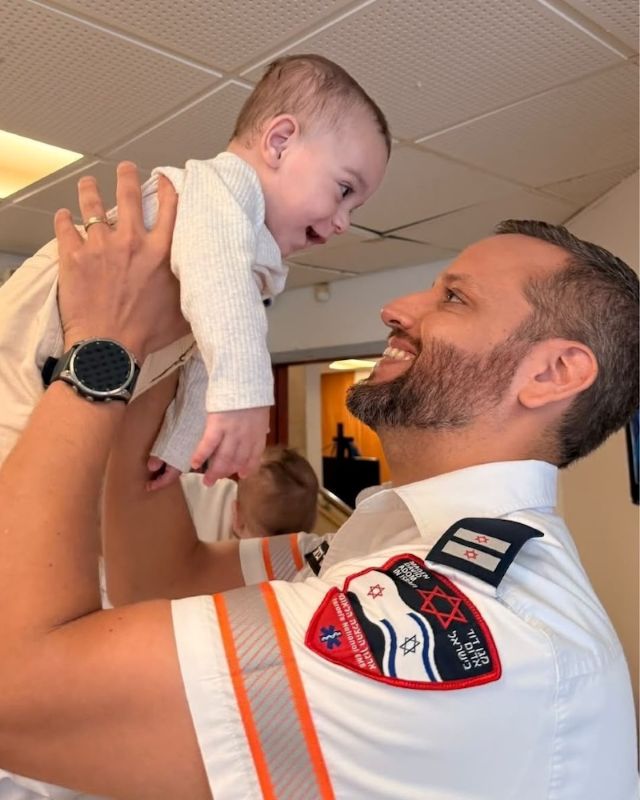
For Tzvi, who started in MDA as a youth volunteer around 2016, and who now is studying to become a nurse, the mission goes beyond single incidents. “In these situations, you focus on structure,” he explains. “Dispatch, command, triage and evacuate. Each one of us knows our role. That is how we keep it controlled.”
He also explains that some images are harder to process. Walking amid destroyed homes, seeing personal belongings scattered across living rooms, Shabbat candlesticks, furniture and dishes. “It immediately brings me flashbacks to October 7th,” he explains.
“You try to stay focused. It’s even like you almost need to be a little bit robotic in the moment, processing usually comes later.” Towards the end of the response, a man in his 40s approached him, panicked, “He explained that his parents lived on that same street and he had rushed from Rehovot as soon as he heard the news,” he remembers. “He had no idea where they were taken and begged me to help him find them.”
For Tzvi, working as an EMT is not just volunteering. It is preparation for a life dedicated to medicine helping others and being a part of the safety net his community relies on.