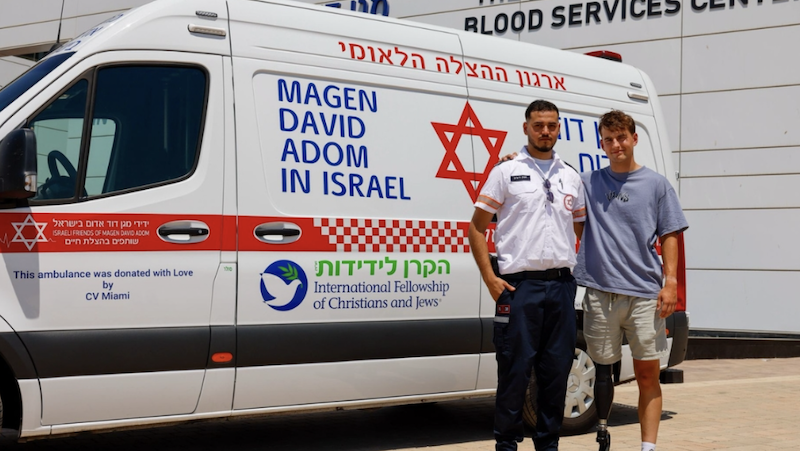



“Everyone Just Wants to Help”: Magen David Adom’s Foreign overseas? Volunteers Step Up in Wartime
When war breaks out, most people look for safety and rush towards the nearest shelter. But at Magen David Adom’s Jerusalem station, something incredible happens: volunteers show up in dozens asking how they can help.
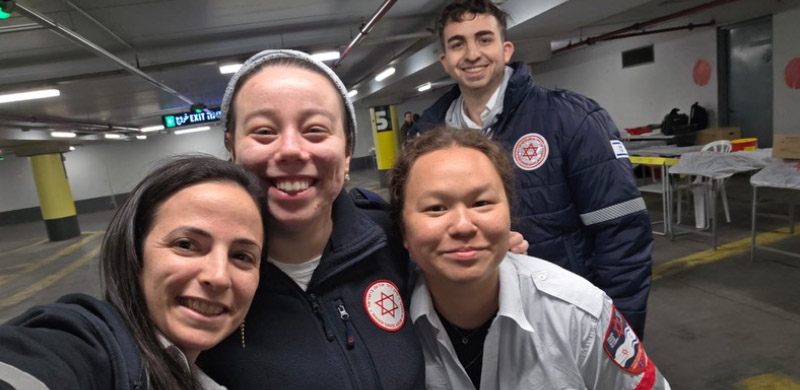
According to Talia Saadon, who coordinates MDA’s Chul (overseas) volunteer program, the most shocking part of the current situation is not how difficult it is to find people to help, but how easy. “We don’t need to convince people to come,” she says. “They appear at the station ready to help. Everyone comprehends how delicate the situation is. Everyone wants to take part in helping.”
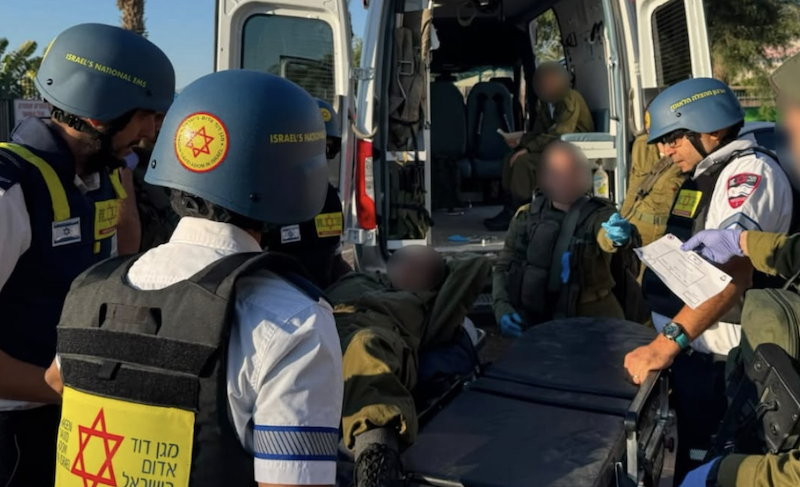
While Israel continues to suffer the turmoil of the war and faces an urgent need for blood donations, these international volunteers have stepped up at MDA’s Jerusalem Station and MDA’s Marcus National Blood Bank and Blood Services Center. Bravely, they choose to report for shifts wherever they are assigned and however difficult the situation might be, instead of choosing to stay home while missiles continue to fly over Israeli skies.
Filling the Gaps
The volunteers come from every corner around the globe and speak several different languages. Nationalities range from Australia, Israel, the United States and many other countries, yet they have been working side by side at MDA’s facilities. Their motivation remains the same: their love for the Jewish homeland and its citizens.
The roles vary depending on the needs of the day. Some help coordinate the newest volunteers. Others support other volunteers at the blood drives: checking people’s blood pressure, organizing equipment and guiding the incoming donors through the blood donation process, and of course monitoring them to make sure they are feeling well before returning to their homes.
Shira, one of the volunteers in Jerusalem, shares how the staff outlines the plan clearly. The first shifts begin at the Romema neighborhood, where the main station is located. Later, some of the volunteers head to the City Hall of Jerusalem and Kikar Safra to help the blood donation teams. The operation runs with precision, but at the same time with heart.
“There’s always something to do,” Talia says. “If there’s an activity, if there’s a need, they just say yes, without thinking about it twice.”
A Culture of Readiness
Part of Talia’s role as a coordinator is to help with the schedules and provide emotional support to the volunteers. She helps make sure that the volunteers are calm and organized amid the intense shifts. However, she attributes her own motivation to them.
“It probably should be difficult,” she reflects. “When you think about it, organizing people during war, well it should be complicated. But honestly, it’s just amazing. Everybody here just wants to help.”
The truth is that this spirit may come from previous experiences. Israel has suffered wars before. The systems are already in place. The understanding is shared. There is no confusion about what we need to do exactly. “Sadly, we all know what we need to do,” she says.
More than Logistics
In times of crisis, blood supply becomes even more critical. Hospitals rely on continuous donations to treat injured civilians and soldiers. MDA is responsible for 92% of the blood supply of the state of Israel. What most don’t realize, however, is that behind every single unit of blood collected lies a quiet network of volunteers: people examining vital signs, preparing equipment, offering donors water, food and most importantly, reassurance.
It’s not necessarily glamorous or dramatic work, but it is an essential part of the lifesaving chain. Perhaps this is the most powerful part of this story.
The foreign volunteers who come to support MDA are not looking for recognition or praise. They do not wait for MDA to request support. They simply see that help is needed, and they take a step forward.