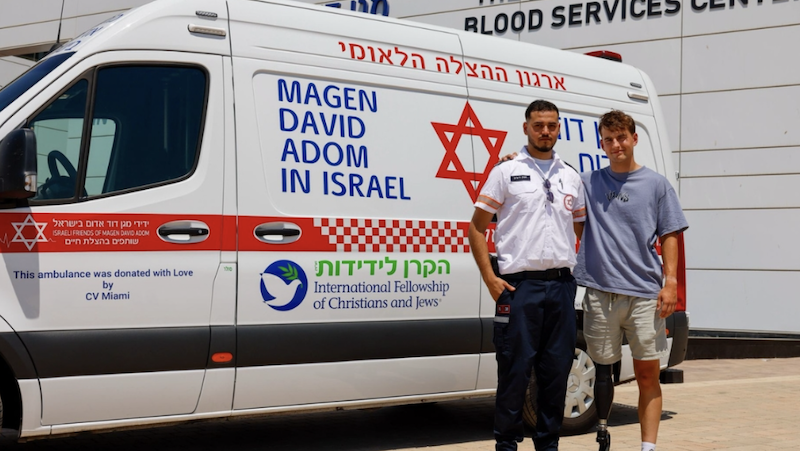



Treating the Invisible Wounds of War: An MDA EMT Responds to a Nova Survivor in Distress
Almost two years after the October 7 attacks, many survivors continue to carry invisible wounds of that fateful day. While sirens and rocket fire send millions of Israelis running for shelter, for some people the sirens not only trigger fear but also resurface deep psychological trauma.
For Magen David Adom teams across Israel, responding to these types of calls means having to treat emotional injuries. At times, the most urgent care is for the mind.
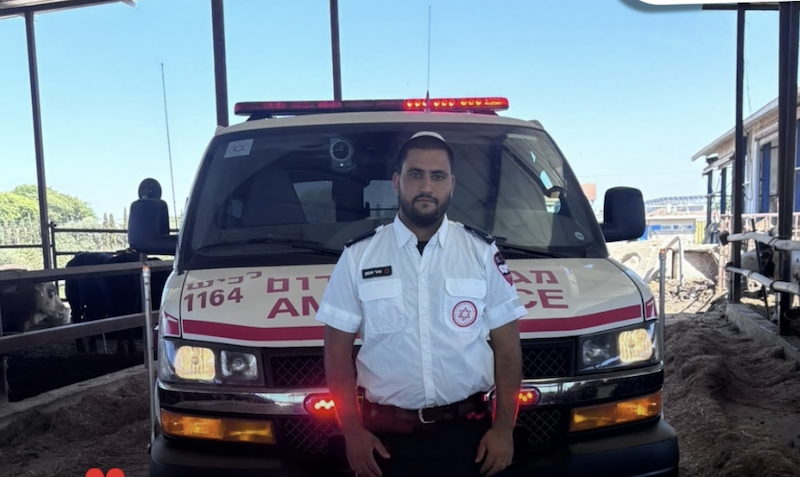
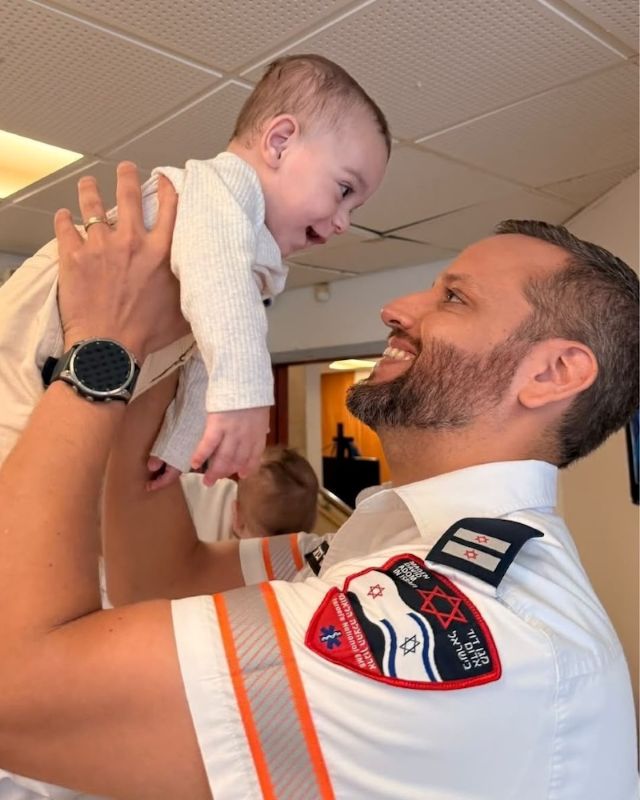
When veteran MDA EMT Gedalia Sabiner, who has served with the organization for around 21 years, responded to a recent call in northern Israel. He realized in seconds that the patient standing in front of him was suffering from exactly that.
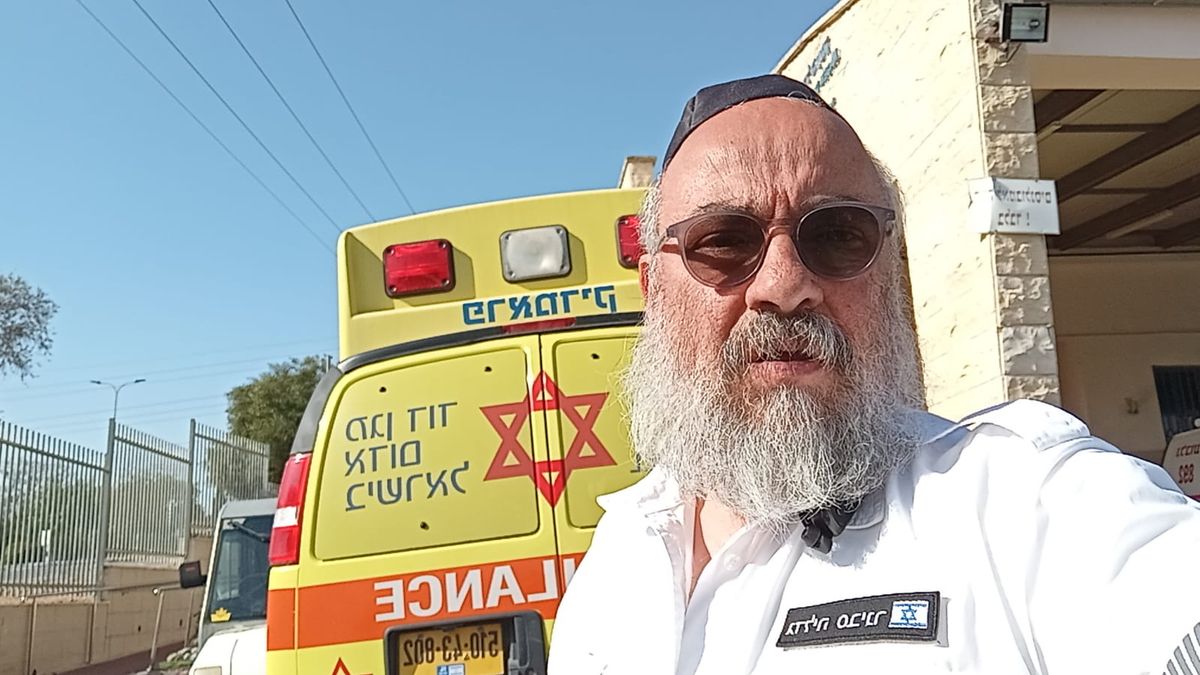
For more than two decades, MDA Senior EMT Gedalia Sabiner has treated more emergencies than he could count. But certain calls are different, not because of visible injuries, but because of the deep psychological scars the war has left.
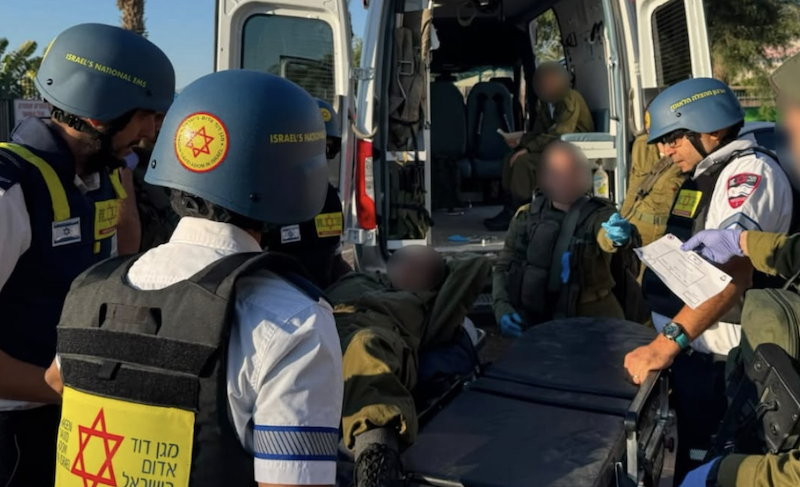
Sabiner is currently serving at one of MDA's stations in northern Israel as part of his military reserve duty. Some time ago, his team was dispatched after an incoming report of a man who had fallen while running to a sheltered room during a siren warning of incoming rockets. “I don’t even remember the exact street,” Sabiner recalls. “But when we arrived at the house, it was clear this wasn’t a place where they could safely stay.”
Upon arrival, he realized the patient had already climbed two flights of stairs back up to the apartment. At first glance, Sabiner suspected that the injuries might not be severe. “They looked very distressed and complained of pain all over their body,” Sabiner said. “But in my mind, I thought, if someone falls and breaks bones, they usually can’t climb two floors back home.”
While speaking with the patient and asking about their medical history and how the fall had occurred, he realized the situation was far more complex than what he initially thought. “That’s when they told us they were a survivor of the Nova music festival,” Sabiner said.
Realizing the heavy emotional weight behind the patient’s distress, Sabiner decided to try a different approach. “I spoke to them differently,” he explained. “On October 7 and the days after, I was deployed in the south and saw some of these things myself. I understood what they might be feeling.” Instead of focusing solely on physical injuries, Sabiner decided to try and calm them. “I told them not to worry, that everything would be okay and that we would take care of them,” he said.
The patient also mentioned they had recently undergone surgery and showed the team the medications they had been prescribed. “They arrived with a box full of medications, easily a kilo or more of pill containers,” Sabiner said.
The team continued working to reassure them and encouraged them to continue taking the medicines they had been prescribed. They also evacuated them to the nearest hospital, where Sabiner himself made sure to inform the receiving medical team that the patient was a Nova survivor likely experiencing severe emotional distress.
“I believe they were going through a terrible emotional storm,” he said. Sabiner explained that he tries to bring into the field the training he took years ago in helping patients cope with trauma. “I once took courses with an organization called First Responders that focused on helping people who experienced trauma,” he explained. “What we see today is on a completely different scale.”
While he is not a psychologist and does not claims to be one, he believes the role of first responders in these situations is often simply to listen. “Sometimes people just need someone to hear them,” he said. “To give them hope and help them calm down. When the mind isn’t calm, the body hurts too.”
After two decades with MDA, Sabiner says the continuous wars weigh heavily on many Israelis. “I’m a grandfather,” he said. “My wife and I once realized that one of our granddaughters, who is four years old, was born into war and hasn’t known anything else.”
Despite the hardships, he believes MDA is a powerful example of coexistence in Israeli society. “At our station we have Christians, Muslims, secular Jews and religious Jews,” he said. “I’m Haredi, and we all work together in complete harmony.”
For him, this spirit is something the entire country and the entire world could learn from. “Everyone can have their own opinions,” he said. “But why not love each other? Why not show understanding?”
“MDA is an incredible organization,” he added. “It brings together people from every background, and everyone is there for the same reason, to help others. And that,” he said, “is something truly amazing.”