


October 7th - Liz Peretz Katz
Revealing the Heroes of October 7th - Meet Liz
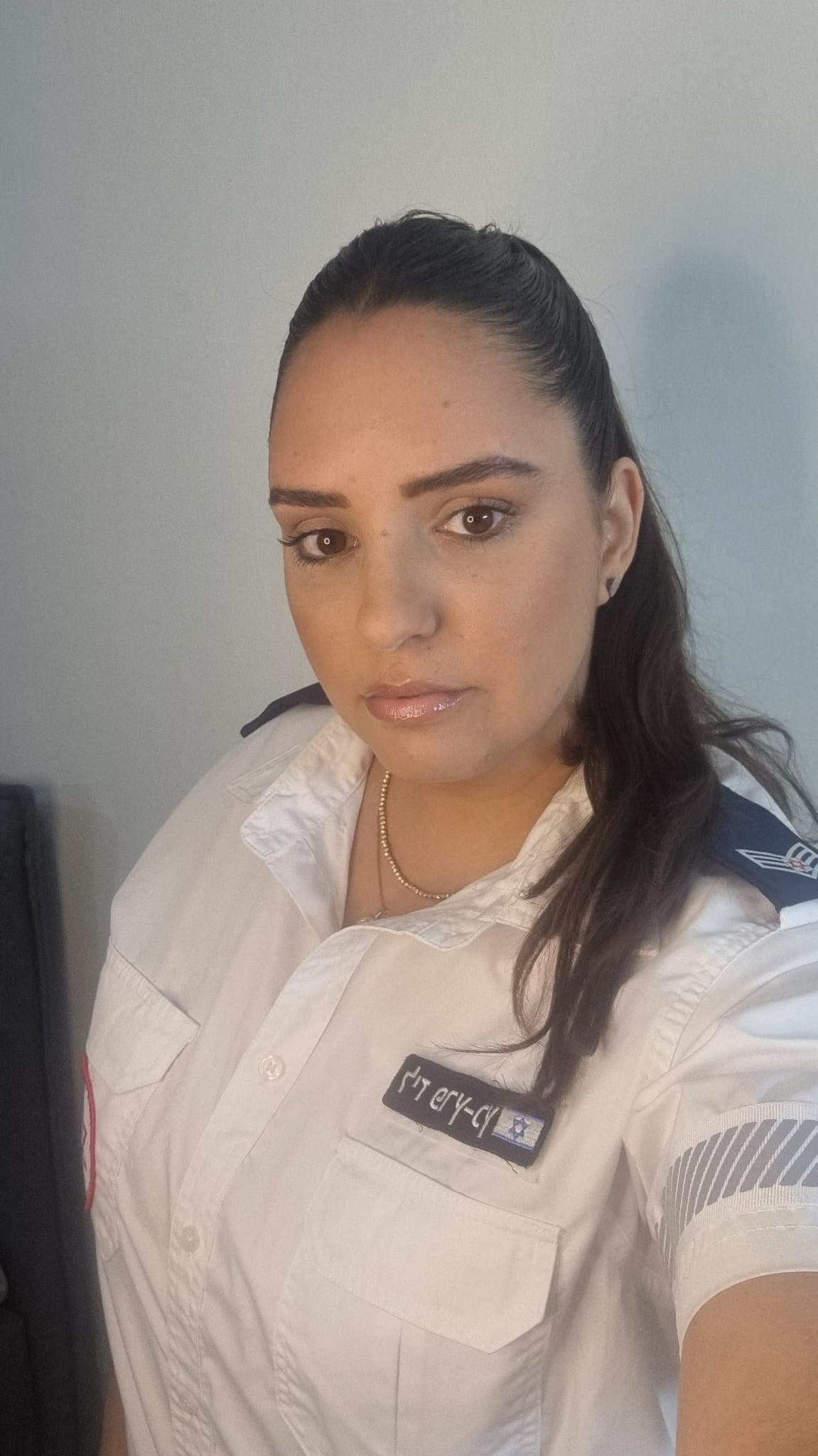
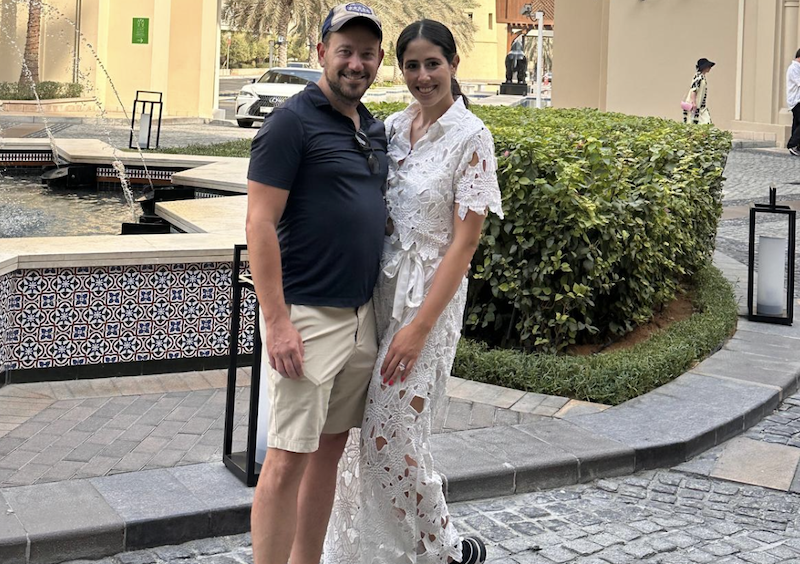
Meet Liz Peretz Katz, a 31-year-old, shift manager in Negev Dispatch Center, who managed the complex sites and found some of her close friends among the casualties.
Liz is married to an MDA senior EMT, mother to 3 girls, works in MDA as an EMT and shift manager for the past decade and lives in Arad. In our conversation she recollected what she felt as the awful reality unveiled itself:
"We were in Kiryat Ekron at my parents', and I woke up to a supposedly routine morning until I went out and the sirens began. My husband and daughters drove back to Arad because we knew the situation was abnormal, but we didn’t use the word "war" yet. We explained to them that something was out of the ordinary and mom has to go to work and that’s why I won't be home. We teach them that some people need mom and dad to help treat them, and right now, that’s the number one priority.
The sirens started just as I left home. I stopped five or six times and took cover. I went into the dispatch center and my eyes dimmed. All over the screen were reports of terror attacks. That is not something you usually see. When I heard sirens I thought we would receive calls about rocket strikes but what I saw was different. Within seconds we received hundreds of calls about gunfire, stabbings and fires.
At 7:10am a MICU team reported on the radio that they were shot at. We realized that there was an ambulance nearby, and that they might encounter terrorist squads. At the same time, we realized there are terrorists in the entrance to Ofakim and we received reports of more encounters.
I tried to get information from the army or the police, from anyone who could provide it to me, but there were difficulties. Usually, the Gaza Division provides the information to us, because they act as our eyes on the military side, and on that Saturday I don’t know what happened but there was no communication with them.
Slowly, we saw that our ambulances were attacked from every direction. The Tzochar ambulance traveled through the field as supposed to the roads to avoid the terrorists, some teams opened improvised treatment sites on the field while they are being shot at. I alerted helicopters for them, found routes for the teams and casualties on the frontlines, when all of a sudden my personal phone rang. It was the Netivot station manager, he told me: "I am putting Aviya on, he's injured." It was about Aviya Hezroni, our volunteer driver from Be'eri.
It turned out he was shot in his stomach, in a safe room in Be'eri. The first thing he told me was "Don’t let me die. Help me get out of here, I want to live." We encouraged him and asked him to hold on. We instructed him to seal the wound with some cloth, we told him "You're an ambulance driver, you know what to do. You have to help yourself now. We will get you out of there the moment we are able to reach you." We had a few calls like that one, and I heard him getting weaker on each one. I knew he was on borrowed time.
I asked the Director of Operations for help and he gave me the phone number of a source in the army who might be able to evacuate and rescue him. We later found out that the IDF force was shot at by an RPG and had to retreat. Aviya stopped answering the phone. I prayed that it was because his battery ran out. I didn’t want to believe that he had bled to death, alone, in the safe room. I held on to hope that until someone arrived to him, touched him and said "that’s it", that there was still a chance for him. I felt I was losing it so I went out to collect my thoughts and went back to work.
We then had a call reached us from the team who found the ambulance which reported that they were shot at. We were told Aharon Haimov was murdered, that was a difficult moment. Meanwhile, we spoke with the brave paramedic Amit Mann, we understood she was under a heavy attack. In the last call she said she was injured from gunfire and then we lost contact. Those hours were horrible. I told myself "Liz, you are on a shift and you have to stay focused." But the list was long: Aviya was murdered, Aharon was murdered, Peter and Dani from the MICU team got shot and now Amit… And at the same time I was afraid for my family… I didn't know whether the terrorists reached them because we didn’t know their route.
Apart from the calls from wounded civilians, we received calls from people who for the first time turned from healthcare providers to those in need of treatment. We had a driver in kibbutz Sufa whose son was shot in the head and he was the first one to reach him with treatment. The army couldn’t meet them so he simply watched his son die in his hands. We had a driver in Be'eri who asked us not to call him because there are terrorists in his house and they might hear the phone. I waited for hours for a sign of life from him. A driver in Revivim I tried to dispatch to a car accident told me he just got recruited as a reservist in the IDF, and after two and a half hours we had to evacuate him because he was injured in combat. That was terrible for me. I thought about him and all the people I know over there, and the impossible situations they are in and I was horrified.
That day I worked for 17 hours, but back then it felt like 17 minutes. The days afterwards were long and difficult as well, but nothing was like the 7th of October, and in my opinion, nothing ever will be."