


Under Fire: MDA Paramedic Sahar Bar-El Responds to Missile Impact in Northern Israel
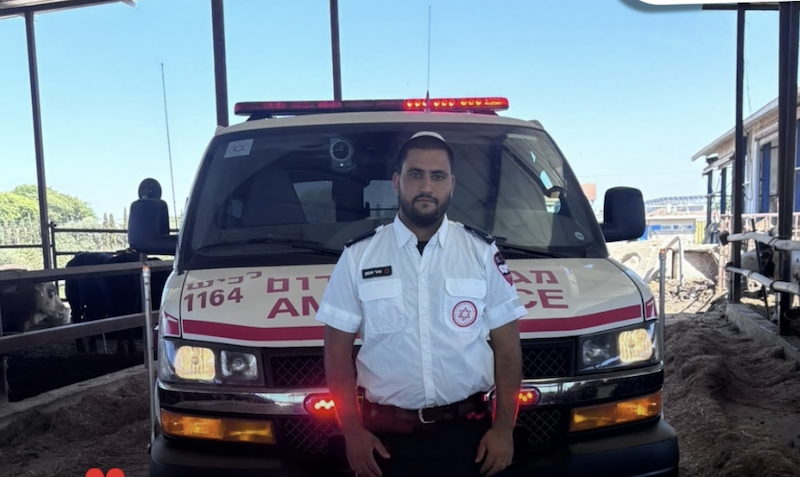
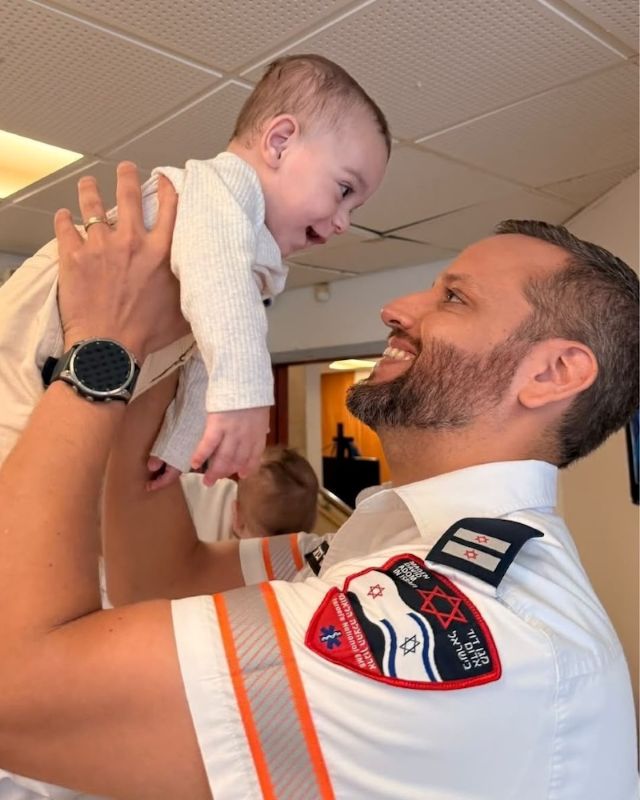
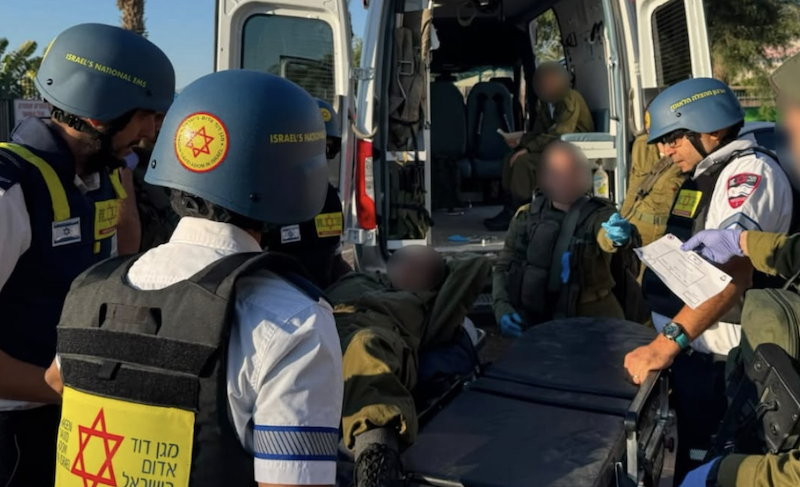
During a recent rocket attack in northern Israel, MDA paramedic Sahar Bar-El, deputy head of the motorcycle unit in the Asher region and a nearly 10-year veteran of MDA, responded to a direct rocket impact in a residential neighborhood. Operating under fire and amid sirens, Bar-El and MDA teams treated multiple patients suffering from anxiety and smoke inhalation, highlighting both the danger of such incidents and the importance of following the life-saving instructions of the Home Front Command.
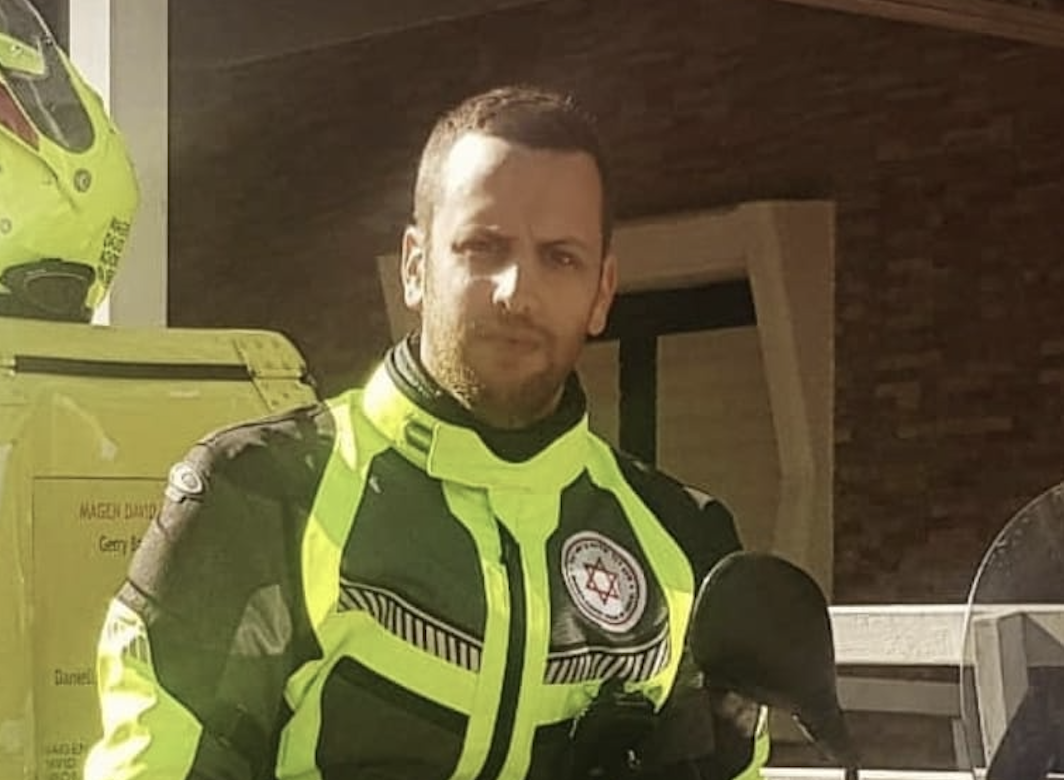
For Sahar Bar-El, a paramedic originally from Nahariya, responding to rocket attacks is not something particularly new. “I’ve lived this reality my whole life,” he said. “Since I was a child, I remember being under rockets and sirens. It’s not new to me, but as a paramedic, it’s different.”
Bar-El, a married father of two and a paramedic with MDA for nearly a decade, was in the middle of one of his usual evening shifts when the incident occurred. “We had just finished a routine call and arrived at the hospital,” he recalled. “After transferring the patient, the sirens started. We heard explosions and understood there had been a direct hit.”
Seconds later, he received a call from MDA’s National Emergency Dispatch Center. “They told me, ‘Sahar, we need you.’ We immediately got into the ambulance and began driving toward the scene, under fire. We could hear explosions, and already on the way we saw a large column of smoke.”
When the team arrived, they encountered a dangerous and chaotic scene. “There was a massive fire in the middle of a residential neighborhood, between two homes,” Bar-El said.
While firefighters worked to contain the fire, MDA teams waited nearby, preparing to assist the injured. “At that stage, we were ready to treat patients as they came to us,” he explained.
Fortunately, there were no critically injured victims at the scene. However, when the situation was under control, residents began approaching MDA teams, seeking medical assistance. “People started coming to us, some suffering from anxiety, others from smoke inhalation, and some who had been inside protected rooms but didn’t feel well after the explosion,” Bar-El said.
Several patients ended up requiring treatment, some of them needing transport to the hospital. “I personally evacuated one patient with smoke inhalation,” he said. “Other teams treated and evacuated additional patients, including anxiety cases and smoke exposure.”
According to Bar-El, the outcome could have been far worse. “This incident showed us how important it is to follow instructions,” he said. “People who stayed inside protected spaces were not seriously injured, and this was an event with every reason for people to get hurt.”
He described the dangers that were present at the scene, ranging from fire to debris and other hazards. “There were gas systems, vehicles, and flammable materials. The fire spread significantly, especially because of the vegetation and surrounding structures,” he said. “There was also damage from shrapnel to homes and vehicles.”
Since Bar-El was the first paramedic on the scene, he carried significant responsibility. “My role was to arrive, build a clear picture of the situation, and report back continuously,” he explained. “I was in constant contact with dispatch, updating them while managing my team.”
Working under constant pressure, he emphasized the need to be focused and in control. “You have to stay sharp, focused, and in control, not only of the scene, but also of your team,” he said. “At the end of the day, the team members are human too. There are sirens, explosions, a large fire, and chaos all around.”
Bar-El also described how paramedics assess and treat the different injuries that can be encountered in such incidents. “With smoke inhalation, for example, you can often identify it quickly,” he said. “Patients may have soot around the mouth, difficulty breathing, or abnormal lung sounds. We provide oxygen and appropriate treatment according to MDA protocols.” He added that other potential injuries in these scenarios can be blast injuries, burns, and shrapnel wounds, each requiring a different medical response.
Beyond the professional challenges, Bar-El acknowledged that working under fire carries a lot of emotional weight. “I served as a combat soldier. I’ve been under fire many times, and I’ve seen death up close,” he said. “I know how to handle these situations.”
Still, he says that stress is often unavoidable. “There is always pressure and stress, like any human being,” he said. However, for Bar-El, the responsibility as a paramedic makes the reality even more intense. “The difference is the responsibility,” he said. “As a paramedic, you are responsible for lives, and that weight is always there.”