


To Save a Life, You Have to Be Human
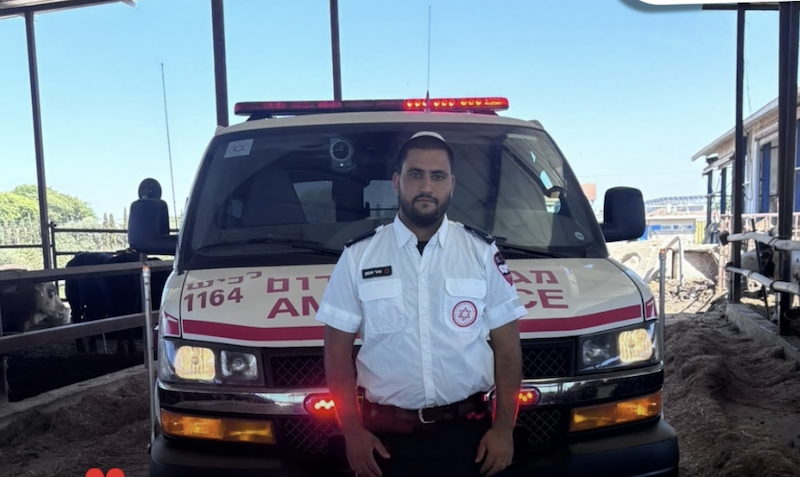
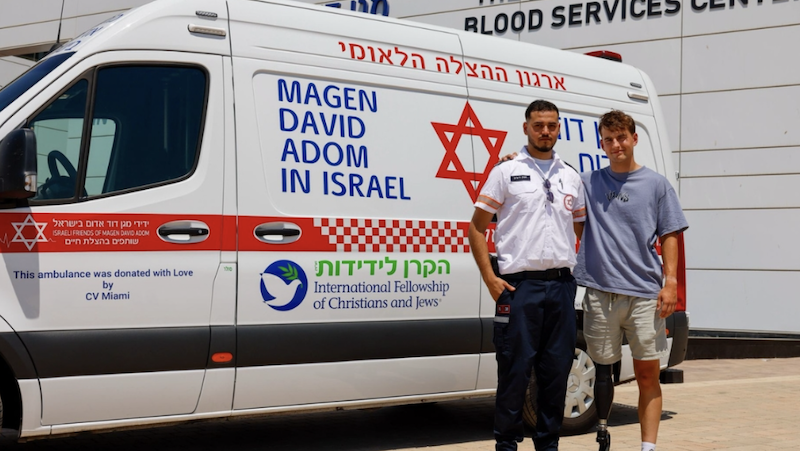
When Jihad Fadila was a teenager, he experienced what it meant to desperately want to help someone and not know how. Today, the 23-year-old from Tira is training to become a paramedic through Magen David Adom’s paramedic course, combining advanced medical education, hands-on experience and state-of-the-art simulation technology as he prepares for the responsibility of saving lives in the field.
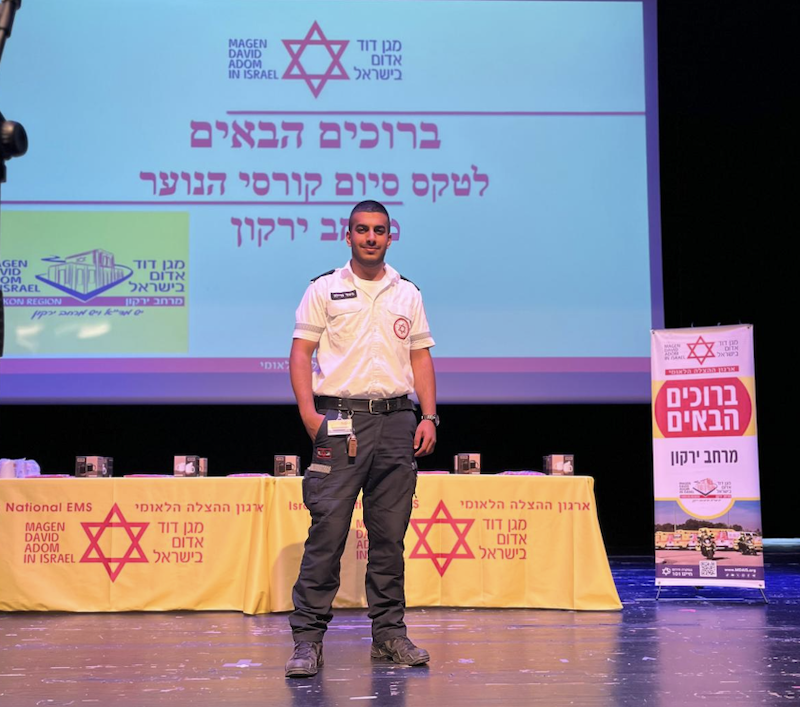
For Jihad Fadila, the decision to learn how to save a life began with the painful realization that he did not know how.
He was in ninth grade when a close friend suffered a medical emergency in front of him. Jihad remembers feeling helpless, unsure of what to do as someone he cared about needed help.
“I didn’t know what to do,” he recalled. “I told myself that I had to know how to help people. I didn’t want to fail at that again.”
The experience stayed with him.
Jihad began pursuing the skills that would later allow him to react differently the next time someone needed help. He trained as a lifeguard and later joined Magen David Adom, where he eventually became an instructor, teaching others the lifesaving skills he once wished he had known himself. As he took on greater responsibility within MDA, he also spent a year and a half serving as a volunteer coordinator.
Now, at 23, Jihad is taking his biggest step yet. Earlier this year, he began MDA’s KAPAV morning paramedic course, preparing for a role that requires not only extensive medical knowledge but the ability to make critical decisions under pressure.
“It’s a very challenging and intensive course,” Jihad said. “You have to study every day and invest a lot. A paramedic needs to have a tremendous amount of knowledge because you need to be able to save a life.”
For Jihad, one of the most exciting parts of the program is the technology MDA uses to transform that knowledge into practical experience. During advanced simulations, trainees work through realistic emergency scenarios using sophisticated patient simulators that can mimic changing medical conditions. Just as they would inside an ambulance or Mobile Intensive Care Unit, students must assess the “patient,” determine what is happening and provide the appropriate treatment, all while working against the clock.
For Jihad, the realism the technology provides makes a difference. Rather than simply learning what to do from a textbook, he and his classmates can repeatedly practice making decisions and providing treatment in an environment designed to prepare them for the pressure of a real emergency.But for all the technology, medical knowledge and clinical skills involved in becoming a paramedic, Jihad believes one quality remains just as important: “You have to be human,” he said.
Emergency medicine, he explained, is not only about treating an injury or illness. Sometimes, an MDA team arrives during one of the most frightening moments a patient or family has ever experienced. Knowing how to speak to them, reassure them and simply remain beside them can be another important part of providing care.
“We’re not only saving lives,” Jihad said. “You have to know how to approach a person, how to help them and how to support them.”
It is a philosophy that reflects how far Jihad has come from the teenager who once stood beside a friend wishing he knew how to help.
Today, through MDA’s paramedic course, he is learning the medicine, technology and decision-making required to become an MDA paramedic. But just as importantly, he is learning what it means to care for the person behind the emergency.
And for Jihad, that is what becoming a paramedic is really about.