


Project DRIVER
Magen David Adom (MDA) is a partner organization in a project funded by the EC, under the 7th Framework Program. The members of the consortium are:
About the project
DRIVER -Driving Innovation in Crisis Management for European Resilience
The European Union’s demonstration project, DRIVER gathers the expertise of 37 organizations, who will jointly develop solutions for improved crisis management. Building upon the findings of previous research projects, DRIVER’s ultimate goal is to enhance European resilience in the face of crisis situations and ascertain sustainable innovation in Crisis Management also after the end of the project.
link Video location on the DRIVER+ website
With 33.4€ million funding from the European Commission under the Seventh Framework Program, DRIVER is the largest crisis management research & innovation project in Europe, if not the world, for the foreseeable future. During the project, the consortium will work on the development of a pan-European test-bed of virtually connected exercise facilities and crisis laboratories where users, providers, researchers, policy makers and citizens can work jointly and iteratively on new approaches and solutions to emerging crisis management issues. This will facilitate capability development through the provision of appropriate methodologies and infrastructures. The DRIVER Test-bed will help to develop a portfolio of crisis management tools to strengthen crisis management capabilities at member state and EU level.
The long-term sustainability of the test-bed, processes and tools will enhance European resilience and crisis management capabilities beyond the duration of the project.
crisis management – an ever evolving challenge
Crisis Management is an ever evolving challenge. Hazards change, both for natural and man-made reasons – climate change being a well-known example of the latter. Vulnerabilities change, for reasons ranging from the establishment of settlements in new areas to societal evolution affecting people’s ability to cope with crises. Interconnectedness changes because of increased connectivity in the technical domain, for example the power transmission system, and in the socio-cultural domain as cross-border communities become increasingly important.
All these societal, technical and environmental changes interact to create new challenges for Crisis Management.
These evolving challenges are not compensated by traditional challenges becoming obsolete. Instead, as societies become more complex, both the increasing scope and unpredictability of potential crises, and the rapid dynamics of the incidents to be managed demand crisis management of an ever higher level of complexity. This does not necessarily mean that the frequency of crises increases, but unless innovation is up to the challenge of producing solutions, which fully exploit modularity, flexibility and adaptivity; then either the cost of capability development or the costs due to inadequate management of crises will grow. On the other hand it is a necessary starting point of Crisis Management innovation to realise that the European Crisis Management capabilities are already a mature and competent System of Systems – here interpreted as a federation of heterogeneous and loosely coupled local, regional and national systems able to collaborate in varying configurations and with varying levels of interoperability. Radical change to these capabilities would be very costly and likely incur unacceptable loss of Crisis Management capability during a long transition phase.
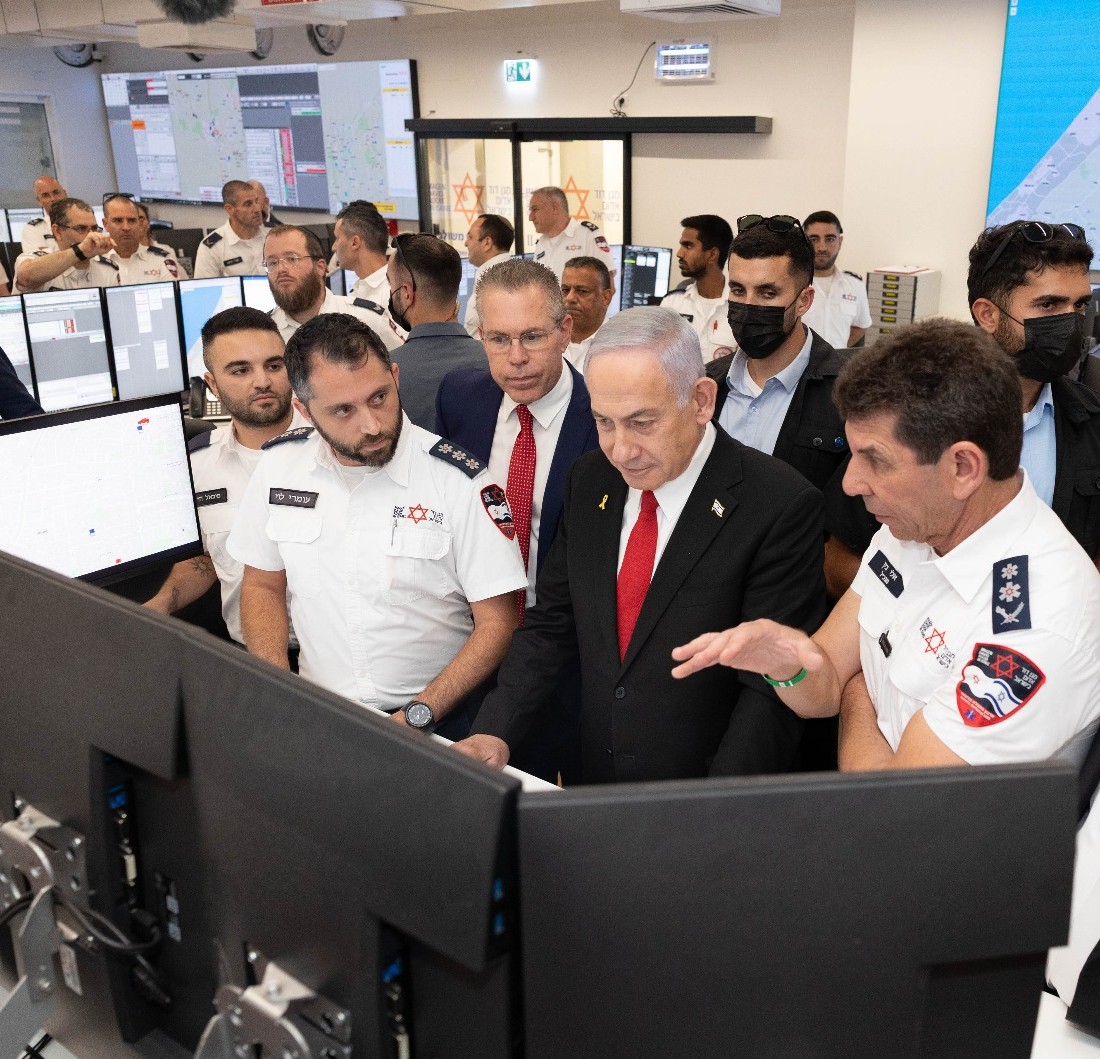
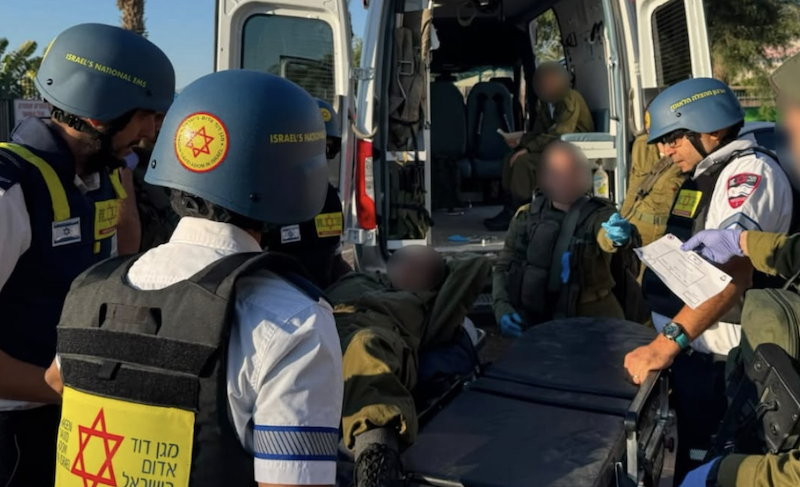
As part of the main activities of the project, a simulation drill designed to test innovative solutions was held at the Civil Defense Training Center in Valabre, France. During the drill, MDA’s Command and Control system (developed by Magen David Adom) was used ,as an integrated system that enabled French firefighters, trained the previous day by MDA, to receive all the critical information to optimize their response to those injured in the event, to save lives and to reduce the number of casualties.
The activities were carried out entirely in a virtual environment created by simulator and showcasing the unique MDA system, which includes using GPS to locate the call for help, receiving pictures from the scene in real time, managing the emergency vehicles responding to the incident and implementing the unique MCI system developed for such situations.
For more information, please refer to the DRIVER website, or to the FP7 website.
**This project has received funding from the European Union’s 7th Framework Programme for Research, Technological Development and Demonstration under Grant Agreement (GA) N° #607798**